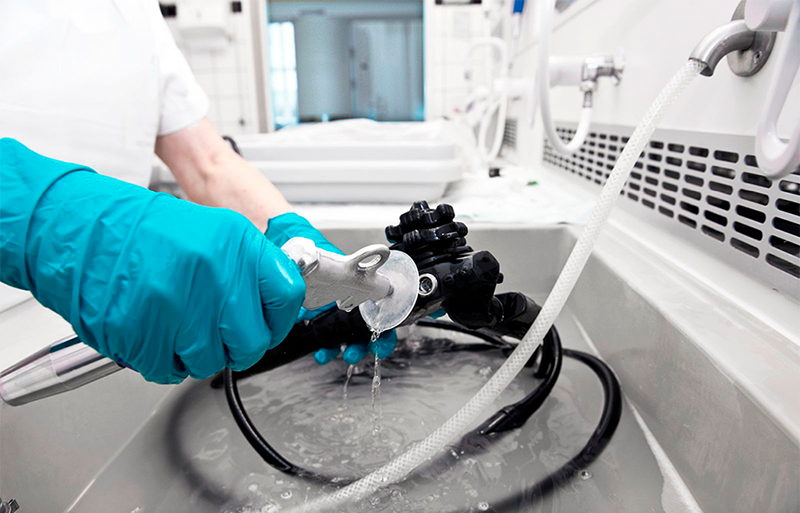
Why “No Phosphates” for Medical Instrument Cleaning?
Q: Why do some medical instrument makers caution against cleaning with phosphate cleaners? A: This derives from fear of Tri Sodium Phoshpate (TSP) cleaners that can have a pH of 12 in a 1% solution, which OSHA, for example, would define as corrosive, meaning…
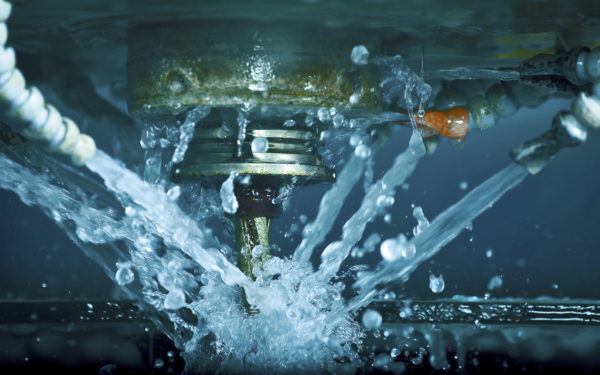
Removing Cutting Oil, Linoleic Acid from Parts
Q: Some metalwork pieces have a residue of linoleic acid (traced back to the cutting oil) that remains after ultrasonic cleaning with Alconox® detergent. Will Alconox® will fully dissolve linoleic acid? Can you recommend a cleaning process to ensure complete removal of all linoleic acid residue from our parts?
A: Alconox® Powdered Precision Cleaner will not dissolve, but will emulsify, the linoleic acid on your machined parts. In order to get a linoleic-acid-free clean, increase

Degassing Ultrasonic Cleaning Solution
Q. How would we determine appropriate degassing time for solution with ultrasonic cleaner? We are cleaning with distilled water with Alconox® detergent.
A. Degassing time varies with amount of dissolved carbon dioxide, which can vary. In general…
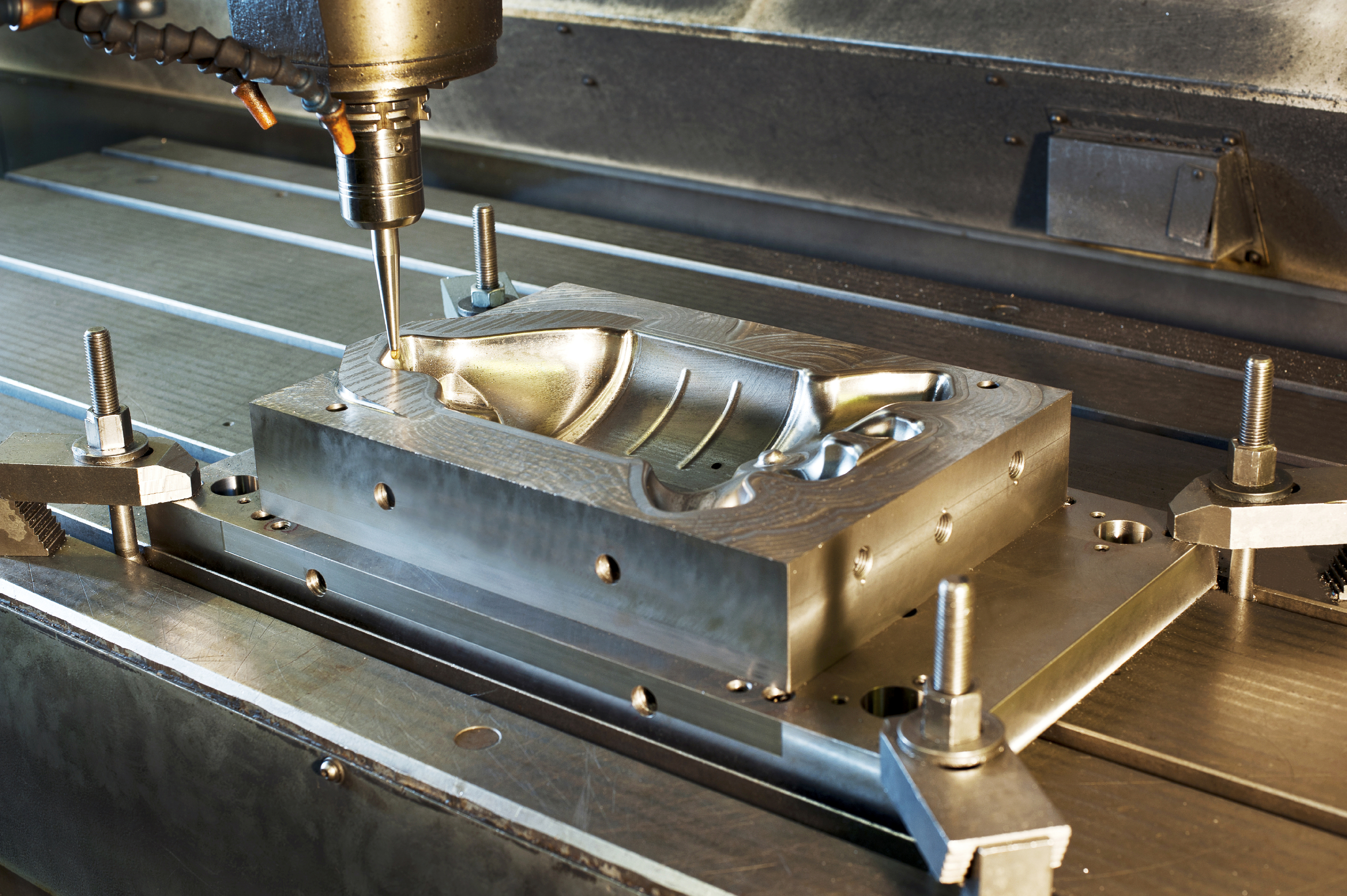
Removing silicone mold release and polysilane oils
Q. How do you remove silicon mold release oils and polysilane oils from stainless steel, plastic and glass? A. The filmy residues of silicone mold release and polysilane oils are very difficult to remove. Mold release agents on glass act as a protective film on

Adequate Alconox Detergent Cleaning Past Shelf Life?
We need to determine whether or not our 1-year-expired Alconox powdered cleaner performed adequately on the product we produced. We keep our Alconox detergent closed in its original carton in a humidity controlled environment at about…
