
Medical Device Cleaning – 303 SS Pins
Q. The 303 staiinless steel pins we are attempting to clean appears clean but the silicone adhesive Dow Corning 3-8264 does not consistently adhere to the pins. Is the Alcojet cleaner the correct cleaner to remove the maching oils from the pins and leave the surface residue free for bonding. I am looking for the proper cleaner to use to prepare some small parts for bonding. We are attempting to use silicone to seal 303 stainless steel pins into a black polycarbonate housing.
Click to read our answer.
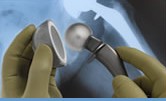
Cleaners for Medical Device Classes
Q. What classes of medical devices are Alconox brand cleaners formulated to clean?
A. Alconox brand cleaners are formulated to clean Class I, II, and III medical devices. For further information please visit the Medical Device Cleaning section of the Alconox website.
According to www.fda.gov , the FDA classifies medical devices into three categories . . .
Is Alconox detergent the same as Liquinox detergent?
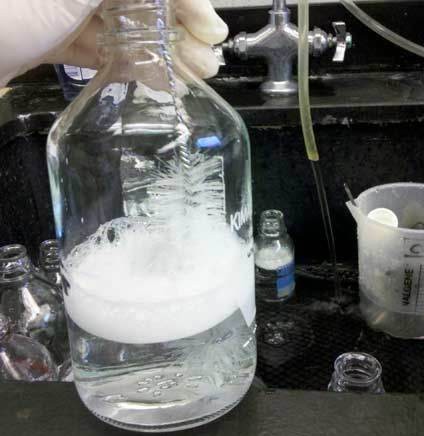
Q. Is the Alconox powder equivalent to the Liquinox liquid? If these are the same could you please provide me with some sort of documentation saying that Alconox is the powdered form of Liquinox and that they are interchangeable?
Stopcock Grease Removal with Alconox
Q. Silicon oil based stopcock grease used to assure that ground glass joints and stopcocks did not freeze got onto glassware and could not be removed by standard cleaners.
A. Silicon the silicon grease contaminated glassware in very hot (170 deg F- 75 deg C) double strength 2% Alconox …

Cleaning Glassware Exposed to Sea Water
Q. What is the proper way to clean lab glassware that has been exposed to sea water?
A. Sea water contains a large and variable quantity of salts, biological and organic residues. Lab glassware needs to be free of any of these residues to avoid interference in research involving sea water. Sea water would not particularly present challenges beyond the normal array of residues that lab glassware sees in the wide variety of types of lab glassware that Alconox, Inc. laboratory detergents are used to clean. A standard cleaning protocol will work fine.
