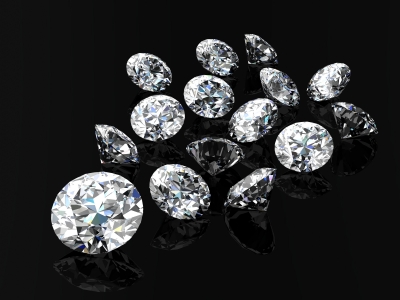
Alconox for Diamond Evaluation
Q. I conduct diamond evaluations for a gem company and need to be able to clean diamonds with minimal effort. A. I recommend using a 1% Alconox detergent solution in an ultrasonic tank to clean diamonds. For information see the Alconox Material Data Safety Sheets.
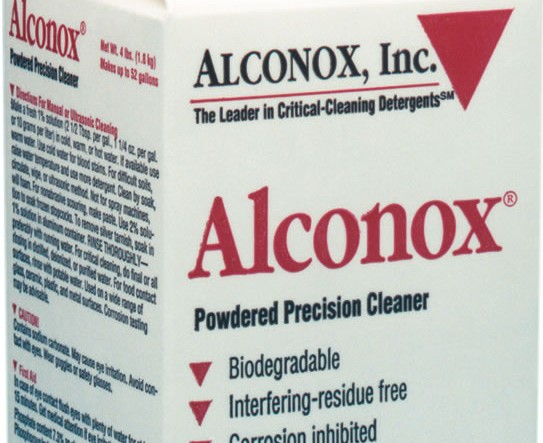
Hardened Alconox Detergent Powder
Q. Is there any way to restore a pail of Alconox to its original form after it has become solid like a rock? A. Regretfully, once solidified, the phosphates in Alconox detergent powder have been hydrolyzed by exposure to water or humidity and then have re-condensed and hydrated to form a phosphate cement.

Alconox and Environmental Safety
Q. I will be sampling sediments in a lake with a drilling unit. I am wondering if Alconox is harmful to the environment. i.e. if it got into the lake, is there a possibility of harm? I plan on using it to rinse drill bits. Also, what concentration is typical?
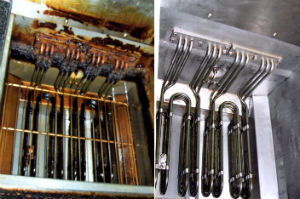
New Fryer? Nope. Just Clean!
A Food service company in Missouri used Alconox for the first time to clean their kitchen’s deep fryer.
According to Janet, the shift manager, “The build up on our fryers was very bad as it had not been deep cleaned for about 2 years. We used Alconox and it was amazing. All the black buildup came off and the fryer looks new.”
Cleaning a fryer with Alconox is simple.
Chlorine added to Alconox for Medical Cleaning
Q. Will adding chlorine increase the cleaning power of Alconox Powdered Precision Cleaner?
A. Adding bleach will offer some disinfecting in addition to cleaning. Note that if the full disinfection power of bleach is needed, the correct way to use it is to clean first with Alconox to remove all residues that would shield the pathogens from the bleach, and then do a second disinfection with bleach for the correct length of time in order to be sure that the pathogens have been exposed to the correct solution for the correct length of time.
