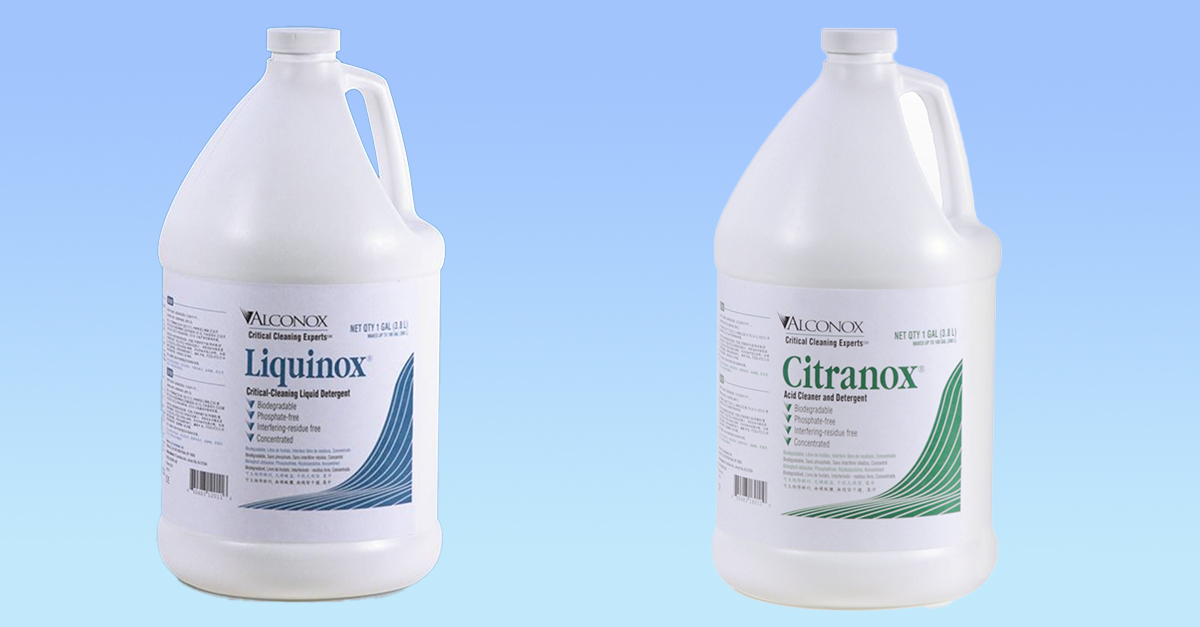
Liquinox vs. Citranox
Q: What is the difference between Liquinox vs. Citranox? We are using Liquinox for many of our applications but are having trouble with stainless steel cleaning cannulas with a small ID. Is Citranox the answer if the residue is inorganic?
A: Although Liquinox detergent is excellent at cleaning a host of residues, Citranox cleaner is indeed the better choice if we are fairly certain this is a largely inorganic residue.
Extra Foam Please?
Q: Since foaming is so critical to COP methods, should operators be agitating the solution(s) to produce foam before and during manual cleanings?
A: Mechanical energy, agitation, and plain old elbow grease, are vital weapons in cleaning and Clean-Out-Of-Place applications. So we would recommend that wherever possible, mechanical energy be applied to remove unwanted residues from the surface we are trying to clean. This will
How to: Reduce Cleaning Time
Q. What can we do to reduce cleaning time? We want to be as optimal and thorough in our cleaning as possible.
A. At Alconox Inc we recognize that manual cleaning may take minutes, spray cleaning seconds, and soaking may take hours, possibly overnight, to achieve comparable cleanliness. Read more….

Defining Free Rinsing Detergent
A non-free rinsing cleaner might contain fragrances that were designed to deposit and leave a fresh scent, or it might contain corrosion inhibitors that are designed to deposit and leave behind an anti-corrosion film.
Alconox, Inc, cleaners are free rinsing detergents and do not leave deposits on substrates after rinsing.

Reactor Cavity Decontamination
Q. What cleaner does Alconox recommend for the decontamination of nuclear reactor cavities and related equipment?
A. Alconox, LLC recommends Detergent 8® Low-Foaming Ion-Free Detergent, a non-ionic, phosphate-free, homogeneous blend of an alkanolamine, glycol ethers and an alkoxylated fatty alcohol for decontaminating nuclear reactors and
