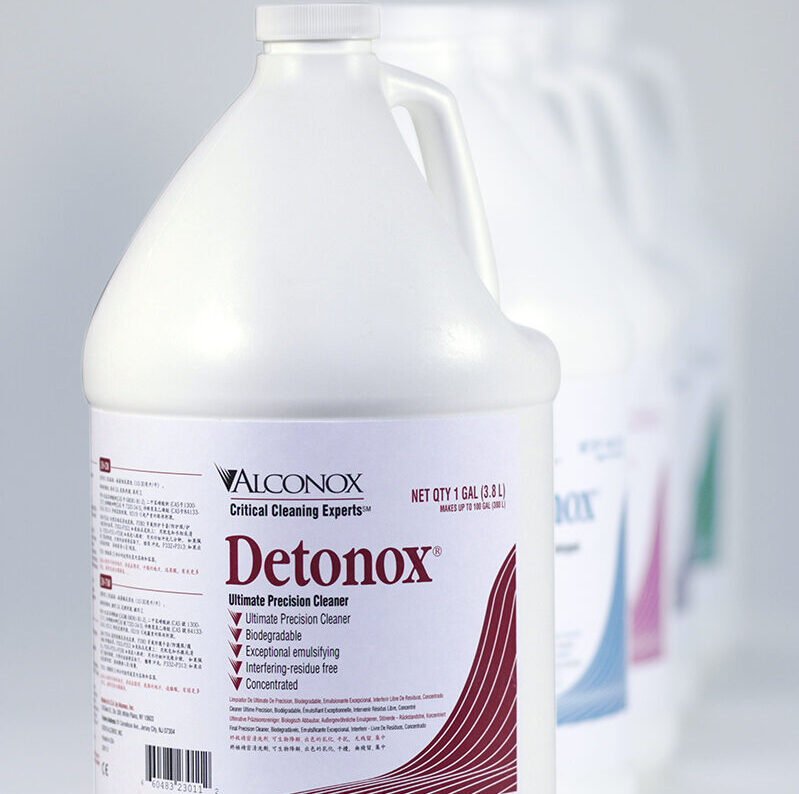
What is Detonox detergent?
Q: You recently recommended Detonox detergent for a tough cleaning challenge we had. You rushed a sample over and it worked fantastically. I have review your technical bulletin, but is there anything else you can tell me about it? Is it better than Alconox and Liquinox? It seems great.
A: Thank you for the feedback and question…..

Cleaning Veterinary Equipment
Q. What do you recommend for cleaning veterinary equipment? Our insemination equipment needs to be free of all interfering residues.
A. Manual cleaning with Liquinox® will provide a clean, residue-free surface prior to sterilization for this sensitive equipment. All of our recommended veterinary detergents are also used in the human healthcare industry.
Defining Free Rinsing Detergent
A non-free rinsing cleaner might contain fragrances that were designed to deposit and leave a fresh scent, or it might contain corrosion inhibitors that are designed to deposit and leave behind an anti-corrosion film.
Alconox, Inc, cleaners are free rinsing detergents and do not leave deposits on substrates after rinsing.

Comply With EPA Field Equipment Cleaning and Decontamination
Q: We are looking for a phosphate free detergent to comply with the EPA document SESDPROC-205-R3 Field Equipment Cleaning and Decontamination.
A: On the EPA government website, for field equipment cleaning and decontamination, the following statement is made: Detergent shall be a standard brand of phosphate-free laboratory detergent such as Liquinox® or Luminox®.
Cleaning Vitamin Residues
Q. We manufacture vitamins, which include minerals (calcium, magnesium etc.) and have found that Citranox is very effective in cleaning the residue left in our equipment. Unfortunately, we have learned that the pH of Citranox is too low for our local requirements. Do you have another detergent with a higher pH that would work equally as well?
